

PERSPECTIVES


Event Recap: The Light and the Dark
Two kinds of artist discuss the different sides of Edinburgh
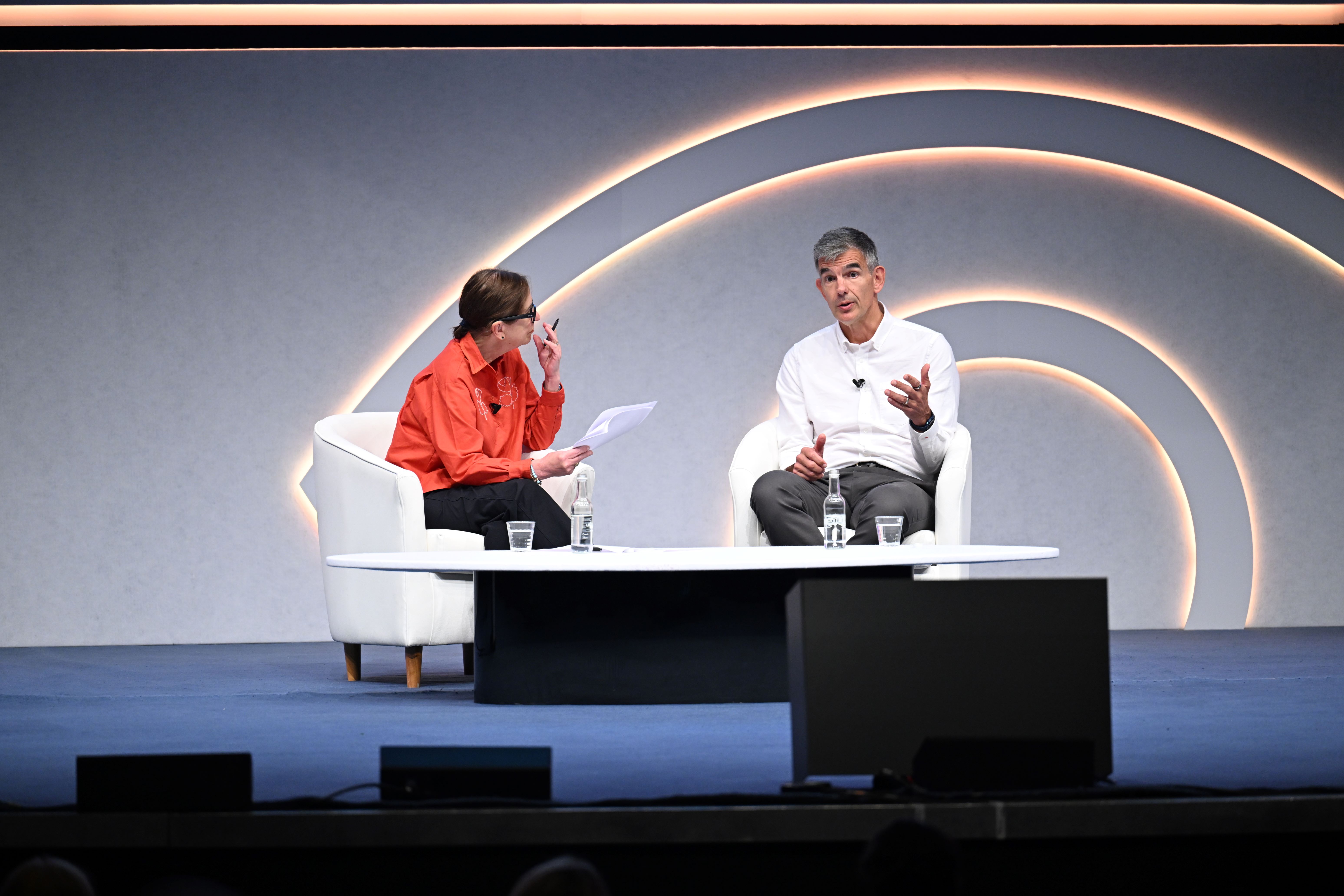
Craigo is a fine art painter known for his impressionistic scenes of the city; Eleanor Morton is a stand-up comedian and writer who has performed at the Fringe for over a decade. On the night of Craigo's August exhibition launch, they discussed Edinburgh as a city of contrasts, certain perceptions of their respective art forms, and the creeping influence of AI.
During their conversation, Morton captured the full August atmosphere, describing the Fringe as a “comedian's Christmas”. She said it was a privilege to see work from every culture and country in her home city, something “you don't appreciate until you're older”. But for performers, the festival is also intense: “It is like freshers’ week and exam week all in one.”
Craigo also views Edinburgh as a city of contrasts, drawn to its changing light, sunrises and coastal setting. He sometimes feels there’s a snobbery towards certain kinds of art. But, rather than avoid those familiar settings, he sees it as a challenge: “There’s a lot of people doing it really badly, so I'll try and push myself to transcend that a wee bit.”
The tension between the creative and the commercial carried into a discussion of AI. Craigo spoke about illustrators already feeling the impact of AI-generated images. For Morton, live comedy offers some protection – “until they get robots to do live stuff, we're fine” – yet AI is already appearing in flyers, show artwork and also in scripts. Both hoped that people would continue to be drawn to creativity made by real people.
The conversation ended with Craigo presenting Morton with an original artwork inspired by her 2026 Fringe show The Mermaid.
The Light and the Dark was held at The Shop with No Name, Edinburgh, 20 August 2026.
Lost in the Algorithm
Why More Content Doesn’t Mean More Choice
The Edinburgh TV Festival wrapped up at the end of August, one last time before it moves to Manchester in 2027. For anyone who doesn’t work in television, the festival may have gone unnoticed, but there’s reason to pay attention to the debates within the industry. While most discussions focus on how to protect the British TV sector, and the people working in it, few highlight the impact on viewers. We’re led to believe that we have endless options when it comes to what we watch, yet our freedom to choose is quietly slipping away. Broadcasters and their competitors are locked in a battle for attention, and – whatever happens to the TV licence – it comes at a cost to all of us.
The Festival’s keynote speech – the James MacTaggart Memorial Lecture – was delivered by Pedro Pina, Vice President at YouTube. While the platform is now a major competitor to traditional broadcasters, Pina pushed back against the narrative that it’s the “villain”, arguing that YouTube and broadcasters can complement each other. He strongly opposed proposals to give public-service content “forced prominence” (the government calls it “appropriate prominence”) on video-sharing platforms and stated that “YouTube is a democracy by definition”.
In a separate festival session, BBC Director-General Matt Brittin offered a different view: “Saying that YouTube is democratic is true to a point, but it’s a democracy where somebody controls who makes money and controls the details of prominence”. He also outlined his plan for the next version of iPlayer, which he wants to become a space “that has our values, that is unadulterated by commercial interests, by algorithms that have other interests at heart”. In other words – a YouTube without an agenda.
This disagreement matters beyond the TV Festival and gets to the heart of an increasingly competitive industry. With more platforms than ever fighting for our attention, the challenge isn’t simply to create content but to make sure that audiences find and watch it. On the face of it, this competition is good for consumers – more content on more platforms means more choice. In reality, we’ve entered an era where algorithms create the illusion of control, but we don’t have as much choice as we think.
Working in television for over 20 years, primarily in audience research, I’ve seen the media landscape transform with the rise of global streamers like Netflix and Disney+. While traditional networks struggle with declining advertising sales and rising production costs, streaming platforms have the resources to secure top-tier talent – both on and off screen – giving them a powerful edge in the battle for audiences. It’s no surprise then, that 16-34-year-olds now spend 89% of their viewing time online.* Consequently, the average age of ‘young-skewing’ channels E4 and ITV2 is 54 and 51, respectively.
In such a competitive market, prominence is everything. Strong viewing figures generate publicity and industry attention, while familiar names make programmes easier to commission and promote. (Sadly, big names don’t guarantee high-quality content, and that’s why we often end up shouting at the screen: ‘How did this get made?!’) But when it comes to what gets seen, nothing has more influence than the algorithm.
Algorithms are embedded across virtually every online space, including broadcaster streaming services. The Netflix Recommendation System (NRS) shapes the entire user experience on the platform, determining where titles appear, in what order and which imagery is used. The NRS is an example of what Professor Christian Sandvig, University of Michigan, calls “corrupt personalization” – it appears to serve our personal interests while also serving the platform’s. The more we interact with it, the more data it can extract, which leads to more precise recommendations. Netflix doesn’t have to rely on conventional advertising when it controls the shop window. Tentpole content is pushed on us and gets viewed, which creates attention and statistics that feed back into the promotional cycle.
This battle for attention inevitably limits the range of stories told, as well as our chances of discovering them. Not every show has to push the boundaries of originality – soaps don’t try to reinvent the wheel and still attract big audiences – but playing it safe means less variety. Broadcasters simply can’t afford to take risks. Having deeper pockets, streamers do increasingly lean into local stories that we’d expect to see on UK channels (Jack Thorne and Stephen Graham’s drama Adolescence is a perfect example of how it’s done), but what about the less expensive, lower-profile, but still important and high-quality programmes? The shows that rarely make headlines, or worse, never get made at all.
It may seem like we’re spoiled for choice, but we risk missing out on real diversity and quality if we default to the programmes given the most prominence. One thing I’ve learned in the last two decades is that while there’s demand for shows that require minimal attention, viewers also want to learn, engage and be challenged by content, and that doesn’t always require big names. Telly at its best makes us connect as humans and it’s often the smallest, most unassuming moments that stay with us.
It remains to be seen whether efforts to make traditional broadcasters more visible on digital platforms will gain any traction. The challenge for the BBC is to remain financially sustainable while fulfilling its mission to act “in the public interest, serving all audiences”. Only time will tell if iPlayer 2.0 can deliver on that ambition. But seeing as nobody else can afford to be democratic, I’m happy to pay my licence fee.
*Source: Barb, 14th June 2026. Online viewing includes Subscription VOD, Broadcast VOD and video sharing services (e.g.YouTube).
Read Professor Christian Sandvig’s blog about Corrupt Personalization here.
The Kickabout That Became A Community
Meet GALS FC: the women putting fun into grassroots football
“It started with one kickabout in the park," says Nora Beqaj.
It was 2022 in post-lockdown London. Beqaj and Lorne Magill – former colleagues and now firm friends – felt they were missing a sense of community and purpose. That summer, England’s football team the Lionesses won the European Championships. Beqaj and Magill wondered if simply playing football might bring a similar sense of joy on a smaller patch of grass.
Not that either were particularly competitive or even that interested in the game. “Lorne had never played football before,” says Beqaj. "We didn't feel comfortable going to a football tryout, or going to play in a league.” And so, they invited a handful of friends to a park in north London. That first kickabout was so joyous that friends began inviting other friends. Soon, demand was so high, they had to get a waiting list.
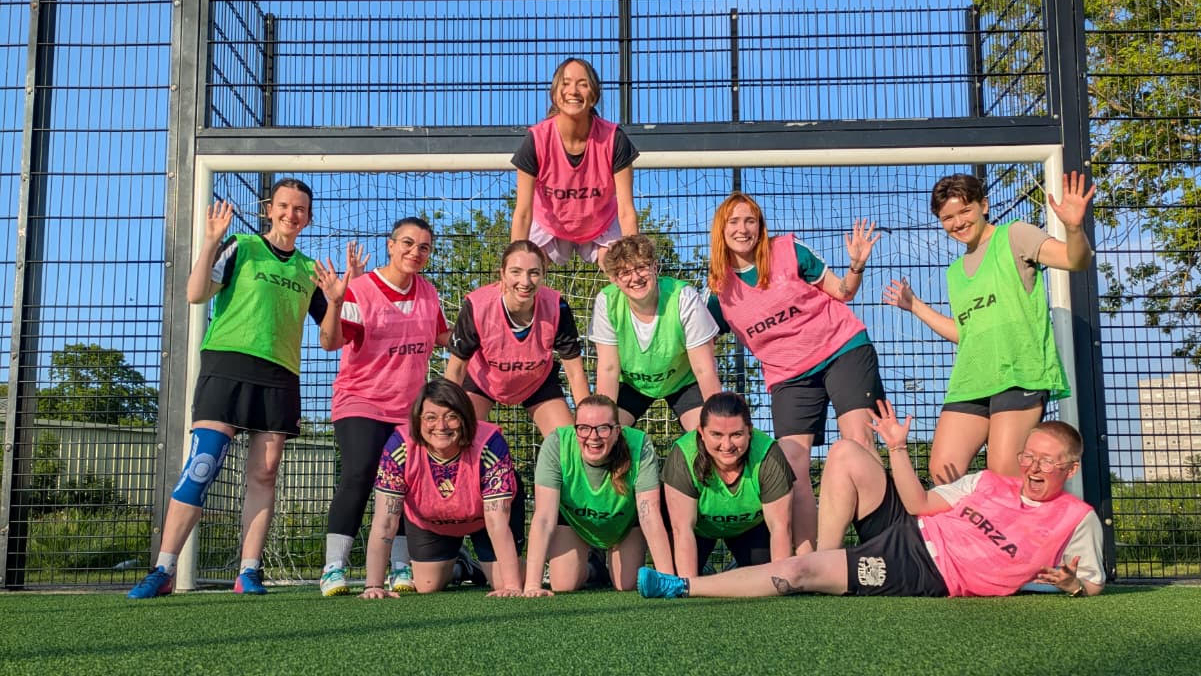
Now, GALS FC have sprouted grassroots groups across the UK. So far, in 2026, there are 72 clubs across England, Wales and Scotland, including two groups in Edinburgh.
Women’s football hasn’t always had the freedom to grow like this. A little over a century ago, the Football Association, in its manly wisdom, made an infamous statement. ‘Football’, it said, was 'unsuitable for females'. A ban on women’s use of football grounds blocked progress for the women’s game and helped solidify the perception of football as a masculine pastime; a perception that endures even today. “It wasn't something that we were excluded from, but not something that we weren’t included in," says Beqaj.
Girls often get the message early that football isn’t for them, while boys are given a football as soon as they're old enough to walk. They continue with the ball at their feet in playgrounds and parks throughout childhood. Girls, meanwhile, are rarely passed the ball in the first place. After years of being overlooked and not invited to play it’s easy to mistake a lack of opportunity for a lack of enthusiasm.
Beqaj mentions a panel one of the GALS team was recently on. “One of the questions that came up was, ‘Why are women resistant to getting into football?’”
It’s a question loaded with the assumption that the problem is women’s resistance, instead of whether football has done enough to welcome women equally. “I would say women aren't resistant to getting into football. They aren't being talked to in a way that gets them excited about it. I felt like there was a space to do this, to put friendship and fun at the heart of something active. Football's an amazing vehicle to do that because at 7pm you could have never kicked a ball before, and by 8pm you've played a full session at GALS FC.”
GALS FC revolves around the idea that football is about play as much as performance. “I think it's just removing the pressure. It's hard to do something new as an adult, and it's also hard to feel good about something when there's pressure on it. I don't ever want someone leaving a GALS FC session feeling: 'I should have got that goal.' Or, ‘That wasn't a very good tackle that I did.’ That is so not the point. It's going from a typically pressure-filled environment to a playful environment. The kind that allows you to reconnect with fun and joy.”
She adds: “It's not that we don't believe there's no space for being competitive. People play with us [one evening] but then they might also play for a competitive team on a Tuesday.” Instead of referees GALS has ‘Vibe Protectors’ to gently remind players the kickabout is about fun: “It's amazing when people buy into the values of the club. And we've been very intentional about our values. It's very clear what we are about. Our t-shirts literally have ‘No Score’ written across them.”
A striking thing about GALS FC is perhaps that it asks ‘What is football about?’. The sport’s worldwide governing body, FIFA, is meant to protect and act as custodians of the beautiful game. Yet, FIFA lurch from one controversy to the next: creating and awarding a dubious peace prize to flatter Donald Trump; over turning on-pitch decisions due to political influence and attempting to make billions by taking commercial advantages of players and teams it doesn’t own. And that is just the last few months.
For all the noise about FIFA’s latest scandals, GALS reminds us that values of community are perhaps stronger in its grassroots than in football’s governing bodies. “There is definitely an element where people make friends at GALS FC. Then that extends to going to matches and travelling places together… We had a group that got together and played on a weekend, and we did a local derby with our five Yorkshire teams.” And she adds: “It also extends to a book club some of our Vibe Protectors run in London.”
GALS FC have a goal to be in every major town and city across the UK. By building a company around recreational football, the community hopes to grow without relying on funding from traditional football bodies. “We're a limited company, and we made that a deliberate choice. For example, we don't take funding from the FA because of our values. They don't allow trans women to play in women’s games that receive FA funding, so we've made a very deliberate choice not to take funding in that sense. But there is also space for a business for good that proves the commercial value of women’s recreational football. We believe in the way that we're doing it. And we've had over 2,000 women come play football with us for the first time. Something is going right.”
Find out more about GALS FC and your local group here.