
Why More Content Doesn’t Mean More Choice
The Edinburgh TV Festival wrapped up at the end of August, one last time before it moves to Manchester in 2027. For anyone who doesn’t work in television, the festival may have gone unnoticed, but there’s reason to pay attention to the debates within the industry. While most discussions focus on how to protect the British TV sector, and the people working in it, few highlight the impact on viewers. We’re led to believe that we have endless options when it comes to what we watch, yet our freedom to choose is quietly slipping away. Broadcasters and their competitors are locked in a battle for attention, and – whatever happens to the TV licence – it comes at a cost to all of us.
The Festival’s keynote speech – the James MacTaggart Memorial Lecture – was delivered by Pedro Pina, Vice President at YouTube. While the platform is now a major competitor to traditional broadcasters, Pina pushed back against the narrative that it’s the “villain”, arguing that YouTube and broadcasters can complement each other. He strongly opposed proposals to give public-service content “forced prominence” (the government calls it “appropriate prominence”) on video-sharing platforms and stated that “YouTube is a democracy by definition”.
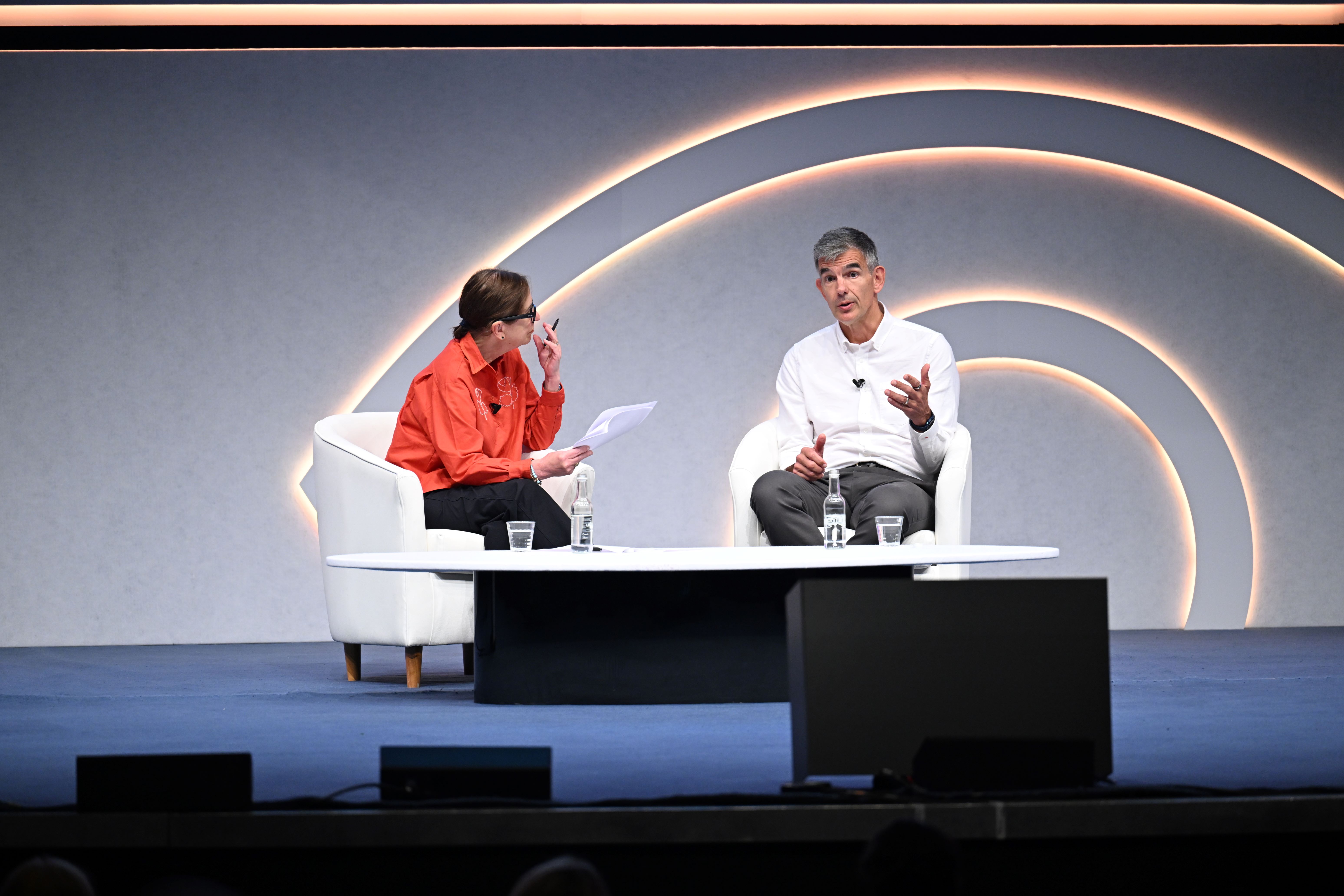
In a separate festival session, BBC Director-General Matt Brittin offered a different view: “Saying that YouTube is democratic is true to a point, but it’s a democracy where somebody controls who makes money and controls the details of prominence”. He also outlined his plan for the next version of iPlayer, which he wants to become a space “that has our values, that is unadulterated by commercial interests, by algorithms that have other interests at heart”. In other words – a YouTube without an agenda.
This disagreement matters beyond the TV Festival and gets to the heart of an increasingly competitive industry. With more platforms than ever fighting for our attention, the challenge isn’t simply to create content but to make sure that audiences find and watch it. On the face of it, this competition is good for consumers – more content on more platforms means more choice. In reality, we’ve entered an era where algorithms create the illusion of control, but we don’t have as much choice as we think.

Working in television for over 20 years, primarily in audience research, I’ve seen the media landscape transform with the rise of global streamers like Netflix and Disney+. While traditional networks struggle with declining advertising sales and rising production costs, streaming platforms have the resources to secure top-tier talent – both on and off screen – giving them a powerful edge in the battle for audiences. It’s no surprise then, that 16-34-year-olds now spend 89% of their viewing time online.* Consequently, the average age of ‘young-skewing’ channels E4 and ITV2 is 54 and 51, respectively.
In such a competitive market, prominence is everything. Strong viewing figures generate publicity and industry attention, while familiar names make programmes easier to commission and promote. (Sadly, big names don’t guarantee high-quality content, and that’s why we often end up shouting at the screen: ‘How did this get made?!’) But when it comes to what gets seen, nothing has more influence than the algorithm.
Algorithms are embedded across virtually every online space, including broadcaster streaming services. The Netflix Recommendation System (NRS) shapes the entire user experience on the platform, determining where titles appear, in what order and which imagery is used. The NRS is an example of what Professor Christian Sandvig, University of Michigan, calls “corrupt personalization” – it appears to serve our personal interests while also serving the platform’s. The more we interact with it, the more data it can extract, which leads to more precise recommendations. Netflix doesn’t have to rely on conventional advertising when it controls the shop window. Tentpole content is pushed on us and gets viewed, which creates attention and statistics that feed back into the promotional cycle.
This battle for attention inevitably limits the range of stories told, as well as our chances of discovering them. Not every show has to push the boundaries of originality – soaps don’t try to reinvent the wheel and still attract big audiences – but playing it safe means less variety. Broadcasters simply can’t afford to take risks. Having deeper pockets, streamers do increasingly lean into local stories that we’d expect to see on UK channels (Jack Thorne and Stephen Graham’s drama Adolescence is a perfect example of how it’s done), but what about the less expensive, lower-profile, but still important and high-quality programmes? The shows that rarely make headlines, or worse, never get made at all.
It may seem like we’re spoiled for choice, but we risk missing out on real diversity and quality if we default to the programmes given the most prominence. One thing I’ve learned in the last two decades is that while there’s demand for shows that require minimal attention, viewers also want to learn, engage and be challenged by content, and that doesn’t always require big names. Telly at its best makes us connect as humans and it’s often the smallest, most unassuming moments that stay with us.
It remains to be seen whether efforts to make traditional broadcasters more visible on digital platforms will gain any traction. The challenge for the BBC is to remain financially sustainable while fulfilling its mission to act “in the public interest, serving all audiences”. Only time will tell if iPlayer 2.0 can deliver on that ambition. But seeing as nobody else can afford to be democratic, I’m happy to pay my licence fee.
*Source: Barb, 14th June 2026. Online viewing includes Subscription VOD, Broadcast VOD and video sharing services (e.g.YouTube).
Read Professor Christian Sandvig’s blog about Corrupt Personalization here.